Illinois Opioid Remediation Fund Administration – Recommendations FAQ
This post answers frequently answered questions about recommendations for use of opioid settlements funds. Please contact the State Opioid Settlement Administrator (SOSA) at [email protected] with additional questions.
Background
The Illinois Office of Opioid Settlement Administration (OOSA) was established per Executive Order 2022-19 to address the opioid crisis by planning, administering, and managing the 55% of the funds received from opioid settlements designated for the Remediation Fund. The OOSA is housed within the Illinois Department of Human Services Division of Behavioral Health and Recovery (IDHS/DBHR) and is led by the Statewide Opioid Settlement Administrator (SOSA).
The OOSA ensures opioid settlement funds meet the requirements of the Illinois Opioid Allocation Agreement (Allocation Agreement), which details the approved opioid abatement strategies. These strategies align with recommendations in the 2022 State of Illinois Overdose Action Plan (SOAP), a comprehensive, equity-centric outline for combatting the opioid epidemic.
Developing a Recommendation
A recommendation is a proposal suggesting how Illinois should use funds from the Illinois Opioid Remediation Trust Fund (Remediation Fund) to address opioid-related harms. These proposals must align with the Illinois Opioid Allocation Agreement and the State of Illinois Overdose Action Plan (SOAP). To learn more about the Opioid Settlements and the Remediation Fund, visit the Illinois Opioid Settlements Initiative.
Anyone can submit a recommendation, including:
- Individuals
- Community organizations
- Coalitions or other regional or local working groups
- Members of the Illinois Opioid Remediation Advisory Board (IORAB) and its Working Groups
Recommendations are submitted through Illinois Remediation Funds (IRF) Core Abatement Strategy Proposed Recommendation form.
A strong recommendation should:
- Clearly describe the proposed strategy or intervention
- Align with Core Abatement Strategies
- Avoid duplication of existing programs or funding
- Be feasible within current infrastructure and funding levels
- Include measurable outcomes or impact indicators
Recommendations seeking funding for a particular organization, organization’s program, or for individuals will not be considered.
Yes. Multiple recommendations are allowed.
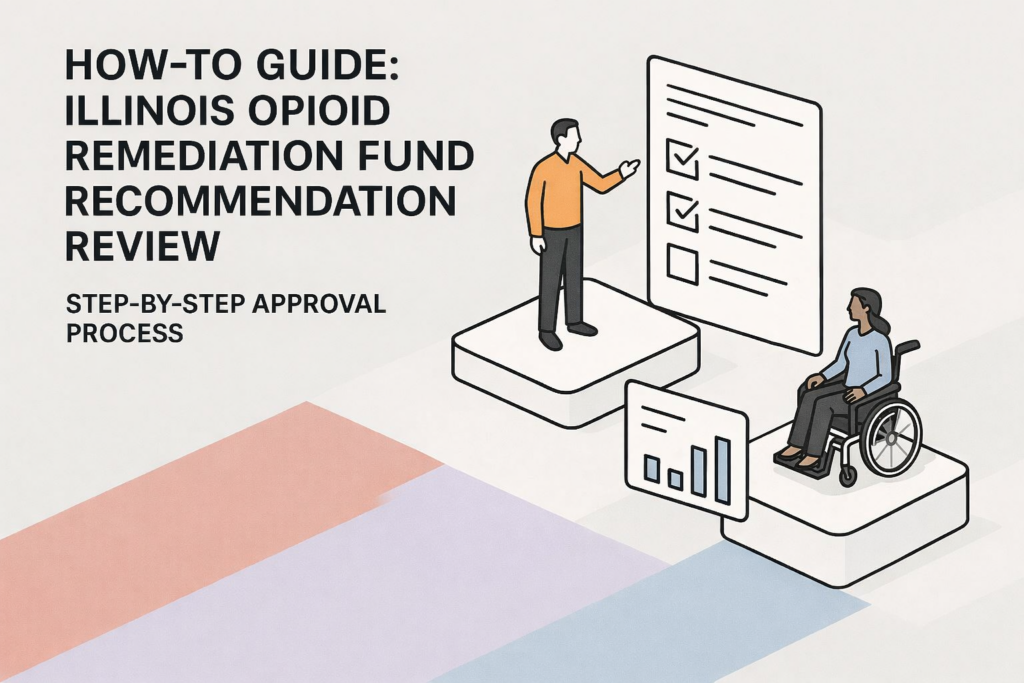
Review and Approval Process
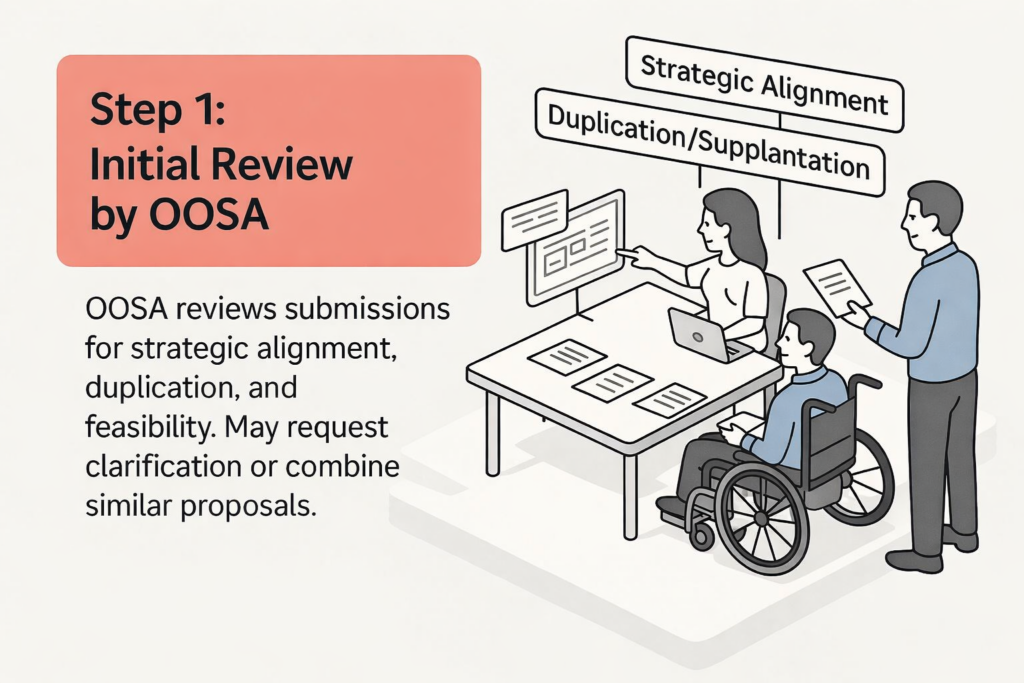
The following images demonstrate an overview of each step of the Review and Approval Process, followed by FAQS.


Step 1: Initial Review by OOSA
The Office of Opioid Settlement Administration (OOSA), led by the Statewide Opioid Settlements Administrator (SOSA), consults with subject matter experts, state partners, and other interest-holders to review submissions for:
- Strategic alignment
- Duplication and supplantation
- Feasibility
The OOSA will acknowledge receipt of the submission may contact the submitter for clarification and additional details. Similar proposals may be combined during the review process to strengthen their impact.
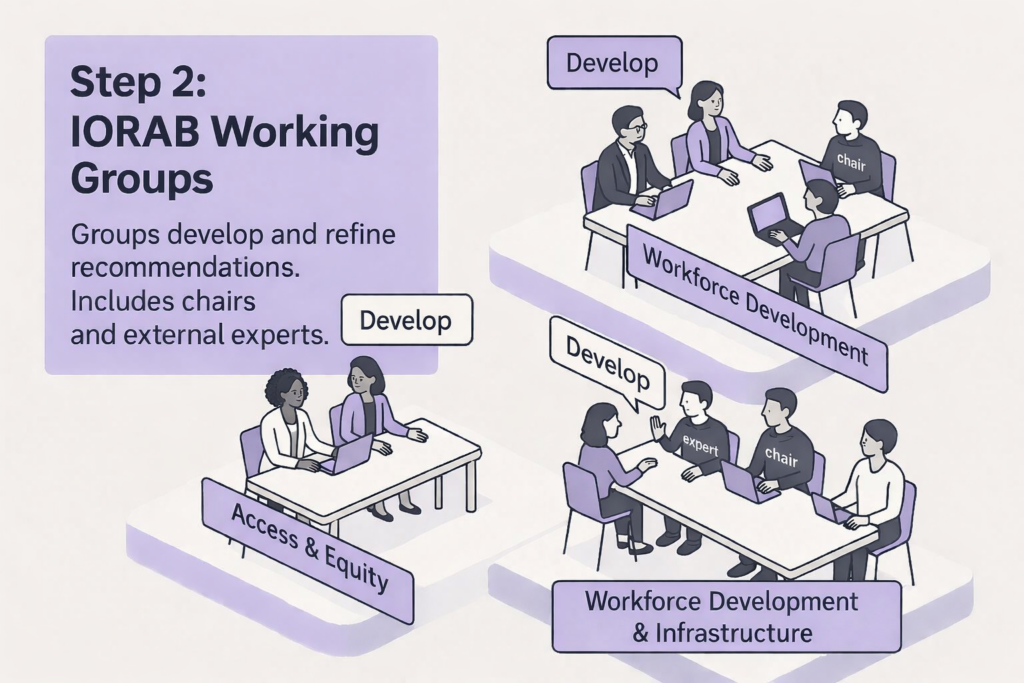
Step 2: Engagement of IORAB Working Groups
The SOSA partners with the IORAB Working Group Chairs and Working Group members to develop and refine recommendations. The Working groups gather quarterly to develop new recommendations in addition to providing feedback on existing submissions. The SOSA shares submissions with Working Group Chairs, who will determine if recommendations are presented to the working groups to refine.
The Working Groups are the Access and Equity, Medical and Research, and Workforce Development & Infrastructure. Each group is chaired by an IORAB member and may include external experts appointed by IDHS.
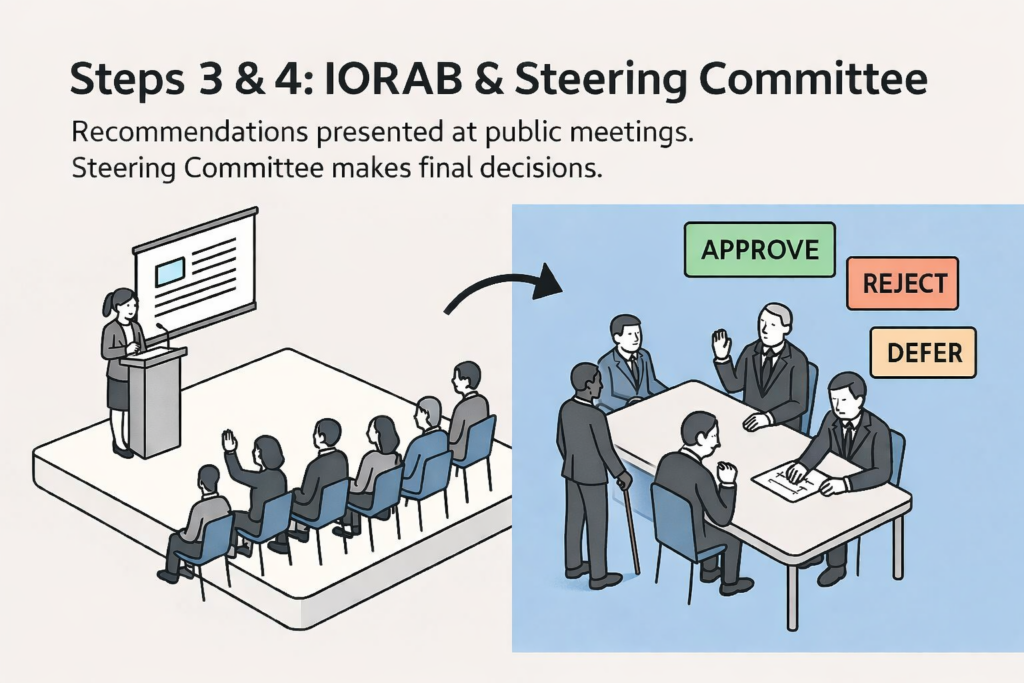
Step 3: Presentation to IORAB
Recommendations are presented at public meetings of the Illinois Opioid Remediation Advisory Board (IORAB), which may:
- Approve
- Reject
- Defer for revision or clarification
Step 4: Steering Committee Decision
Approved recommendations are forwarded to the Governor’s Opioid Overdose Prevention and Recovery Steering Committee (Steering Committee), which has final decision-making authority.
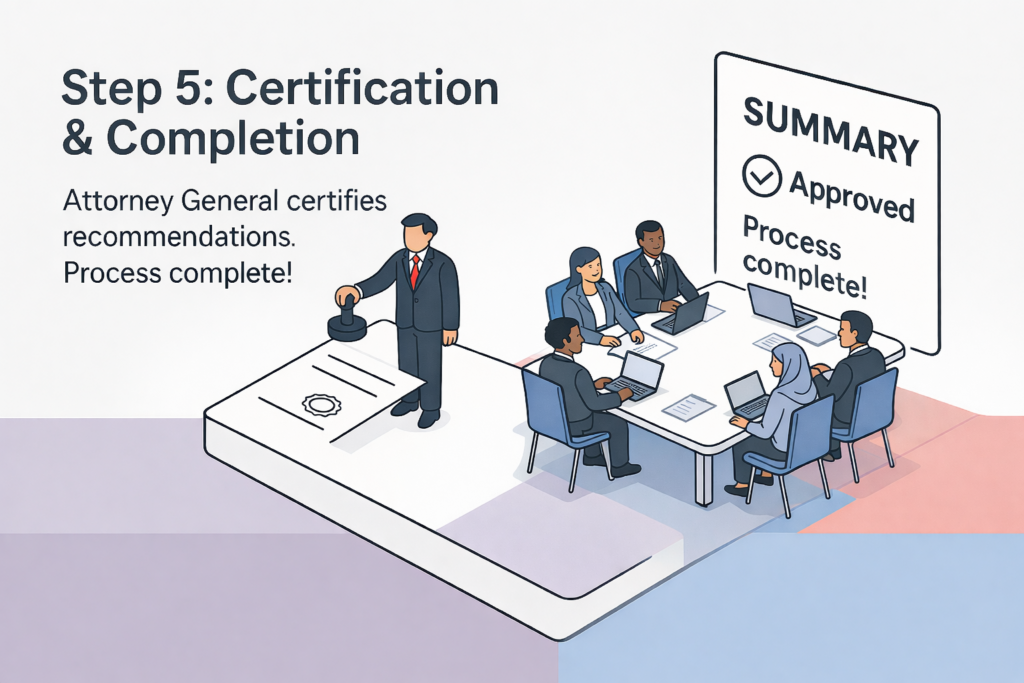
Step 5: Certification by Attorney General
Once approved, recommendations are certified by the Illinois Attorney General’s Office to ensure compliance with legal and financial terms.
Yes. Anyone can submit a recommendation and all IORAB and Steering Committee meetings welcome public comment.
- Visit the IORAB and Steering Committee pages for meeting schedules, recordings, and meeting minutes.
- Visit the Illinois Opioid Settlements website for quarterly updates regarding approved recommendations.
Funding and Implementation
The OOSA identifies a procurement process for each certified recommendation. The processes are:
Notice of Funding Opportunities (NOFOs)
A Notice of Funding Opportunity (NOFO) is a public announcement issued by a government agency or designated administrator (such as IDHS or RCCA) inviting eligible organizations to apply for funding. NOFOs outline:
- The purpose of the funding
- Eligibility criteria
- Application instructions
- Deadlines
- Evaluation and selection process
In the context of Illinois opioid settlements, NOFOs are used to implement certified recommendations by funding programs that address opioid-related harms.
Service Expansions
Service Expansions refer to the enhancement or scaling up of existing services or initiatives. This can include:
- Increasing geographic coverage
- Extending capacity
Intergovernmental Agreements (IGAs)/Uniform Grant Agreement (UGA)
An Intergovernmental Agreement (IGA) is a formal contract between two or more government entities—such as state agencies, counties, municipalities, or tribal governments—to collaborate on shared responsibilities or services. IGAs typically:
- Define roles and responsibilities
- Outline funding arrangements
- Establish performance expectations
IGAs may be used to distribute funds, coordinate responses, or implement joint programs across jurisdictions.
For programs funded by the Opioid Settlements Funds, NOFOs are developed and managed by the Advocates for Human Potential as the Regional Care Coordination Agency (RCCA).
The RCCA handles:
- Drafting and posting NOFOs
- Application review
- Awarding and monitoring subrecipients
Recommendations are submitted through Illinois Remediation Funds (IRF) Core Abatement Strategy Proposed Recommendation form.
Visit Illinois Opioid Settlements Initiative Funding Opportunities to review current funding opportunities.
Visit IL RCCA Awards. Each program page includes details on the awardees and their program implementation activities.
Yes. Multiple recommendations are allowed.
Learn More
To learn more about the committees and groups involved in the Governance Process, review the The Remediation Fund: Governance – Illinois Regional Care Coordination Agency.